


COLLECTABLE STORIES: FEFERLE

FEFERLE
Short Talk with Alica Khaet (director)
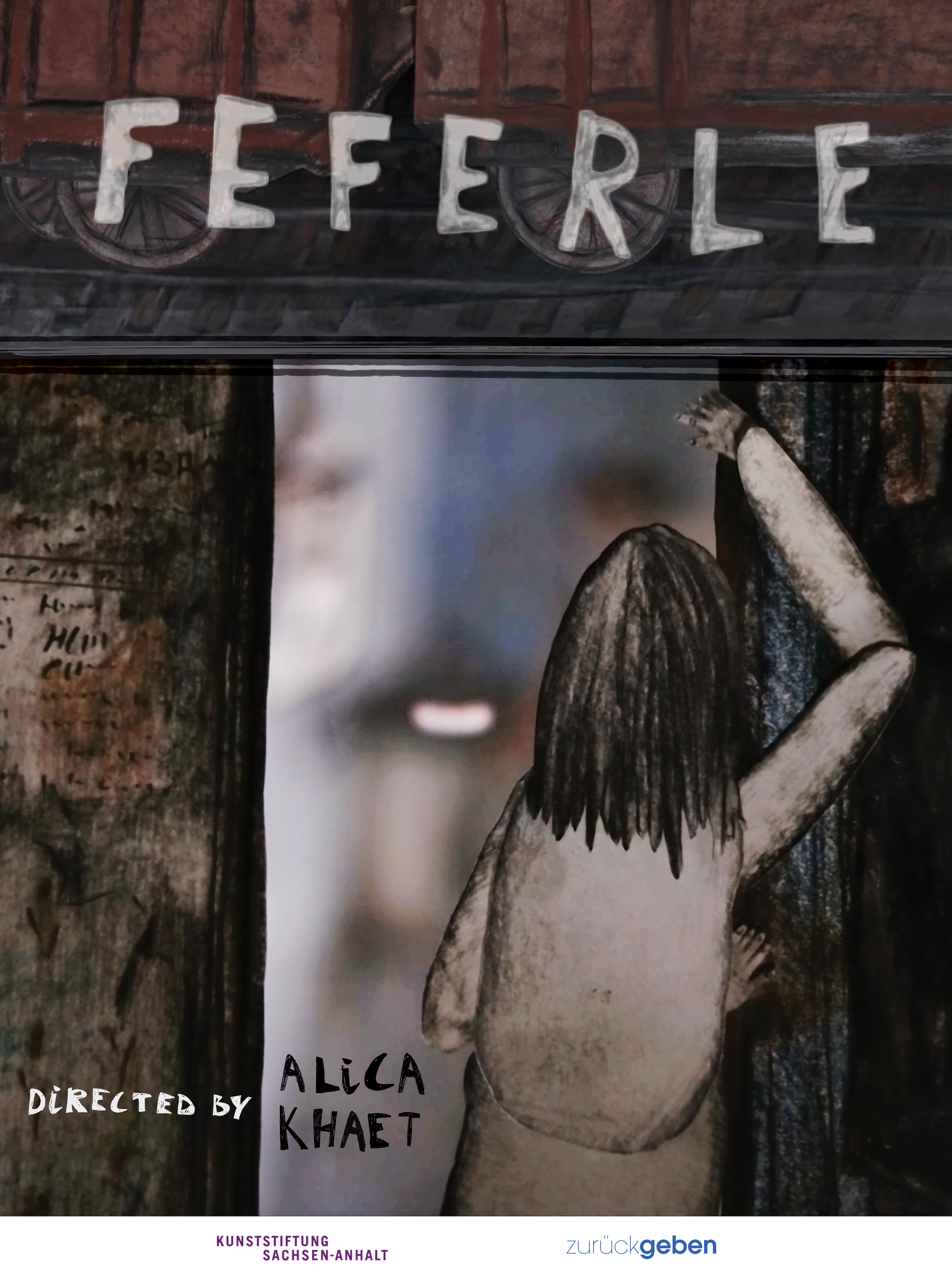
BEST SHORT ANIMATION FILM Category
22nd IN THE PALACE International Short Film Festival 2025
Germany, Animation, German, 00:14:48, 2024
Synopsis: Feferle, a whimsical and childlike being, awakens one fateful day with the unsettling knowledge that something terrible has happened. The sudden loss of her father shatters her world, leading her into a poignant exploration of family history. Tasked with sorting through the cluttered apartment, Feferle delves into the material remains, with each item revealing the story of generations and encapsulating a century, a region, and the intricate history of a Jewish family wandering through Eastern Europe. "Feferle" unfolds as a touching tale of a young woman's quest to make sense of her past, finding solace amid the artifacts that narrate not just her father's life but the rich mosaic of a bygone era.
Biography: Alica Khaet was born in 1988 in Rostov-on-Don, Russia, and moved to Germany in 2009 after several years in Israel. She studied art and animation in Jerusalem, Prague, and Halle, graduating from Burg Giebichenstein University of Art and Design Halle in 2018. Her work spans graphic art, painting, and animation. She has received multiple scholarships and awards for her artistic and film work. Khaet’s works are part of museum collections, including the House of German History (Haus der Geschichte der BRD) and others. In 2024, she released her debut animated short film Feferle, which has been successfully presented at international festivals.
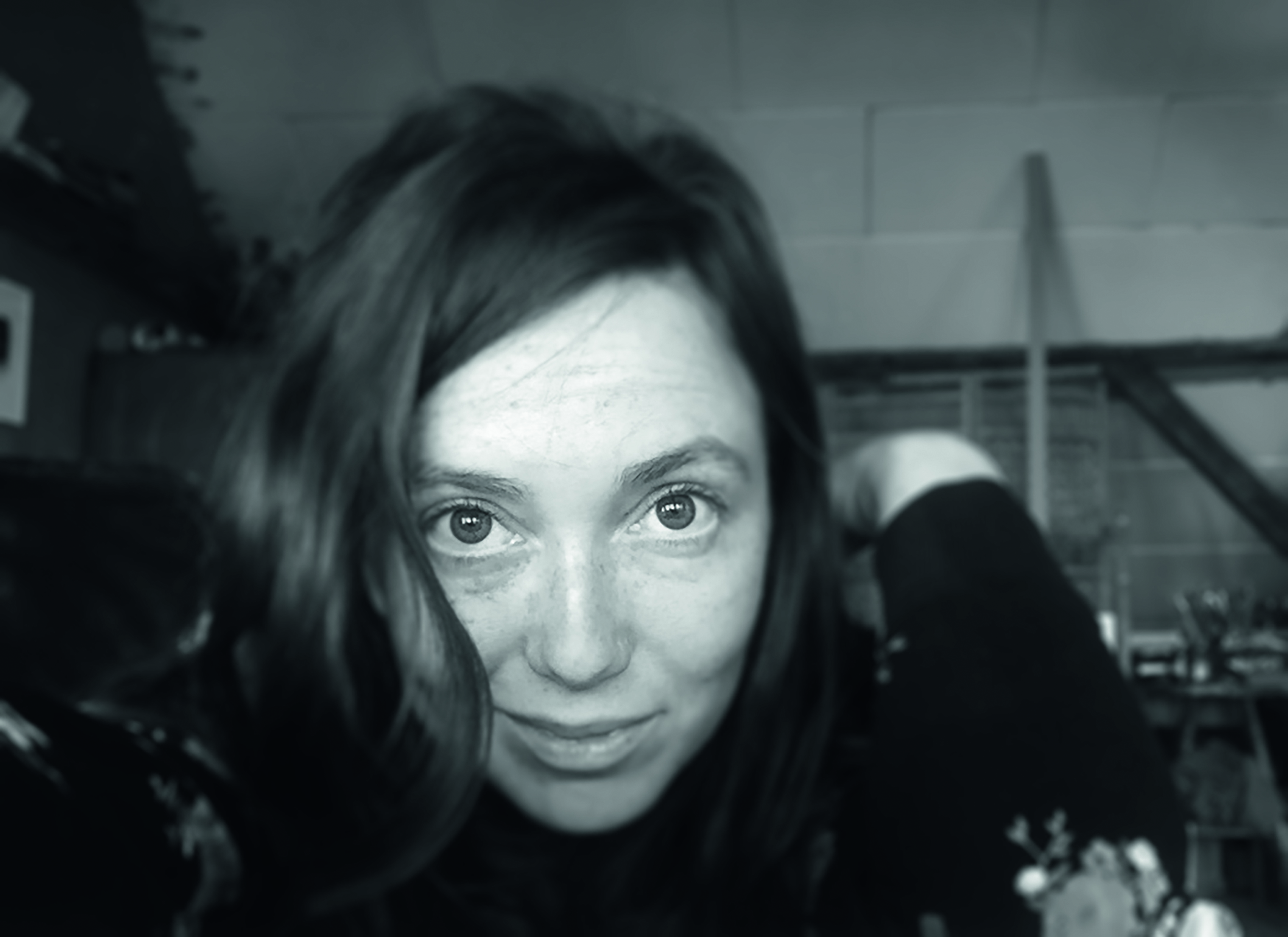 Alica Khaet, director
Kaloyan Vasilev: The opening scenes of the film, there’s quick reframing and constant changes of focus. At first, it feels almost like a mistake, but then it becomes clear that it’s intentional. What’s the idea behind that choice?
Alica Khaet: It was quite an intense process for me to find my own artistic approach to this film. Since it’s essentially about memory, about getting closer to personal and family memories, I played a lot with focus shifts. For me, it visually represents the process of digging into memories, even when those memories don’t fully exist anymore.
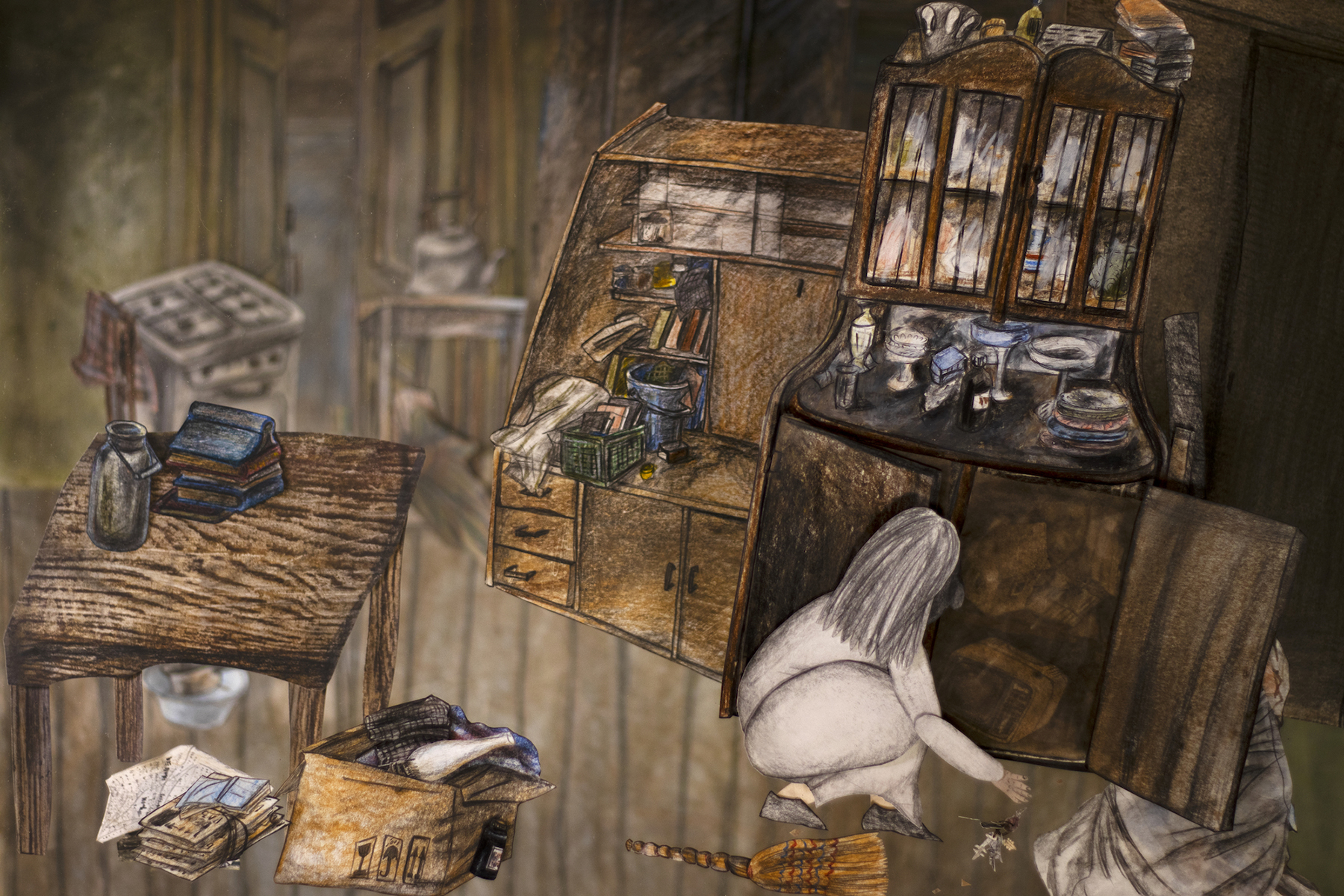
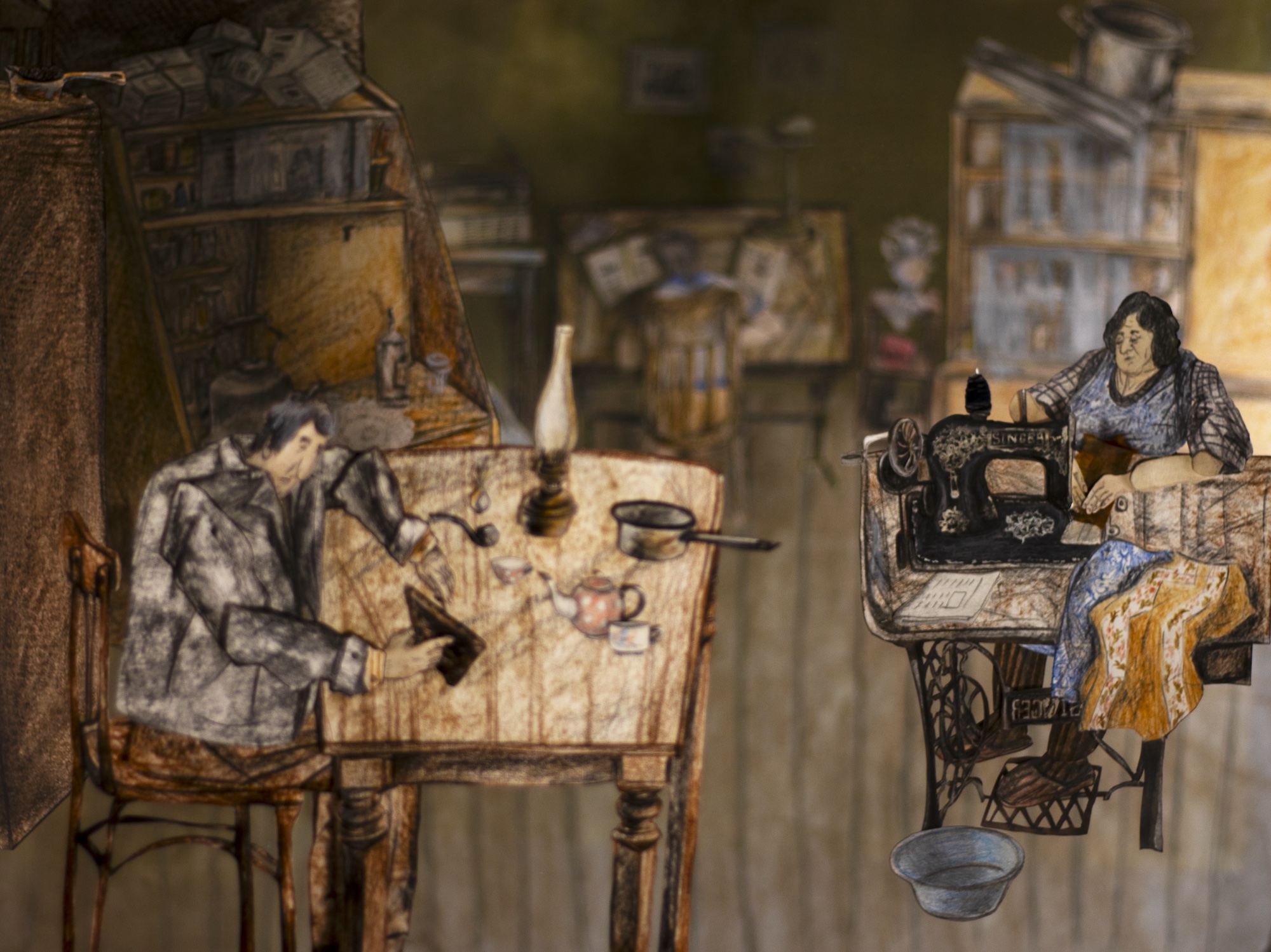
Kaloyan Vasilev: The film does have a dreamlike quality, almost like a fever dream at points. The animation also has a lot of layers. Some are hand-drawn, others are made from objects, like the sewing machine. How did you combine all of these elements?
Alica Khaet: It’s an analogue multi-plane paper cut technique. If you can imagine, a table with several layers of glass plates. On each plate, I placed hand-drawn and hand-cut paper objects. A camera was mounted above the whole construction, and I animated everything frame by frame, like stop motion. And the sewing machine, it’s not scanned. I built it entirely from paper cutouts, tiny details included, and moved it frame by frame.
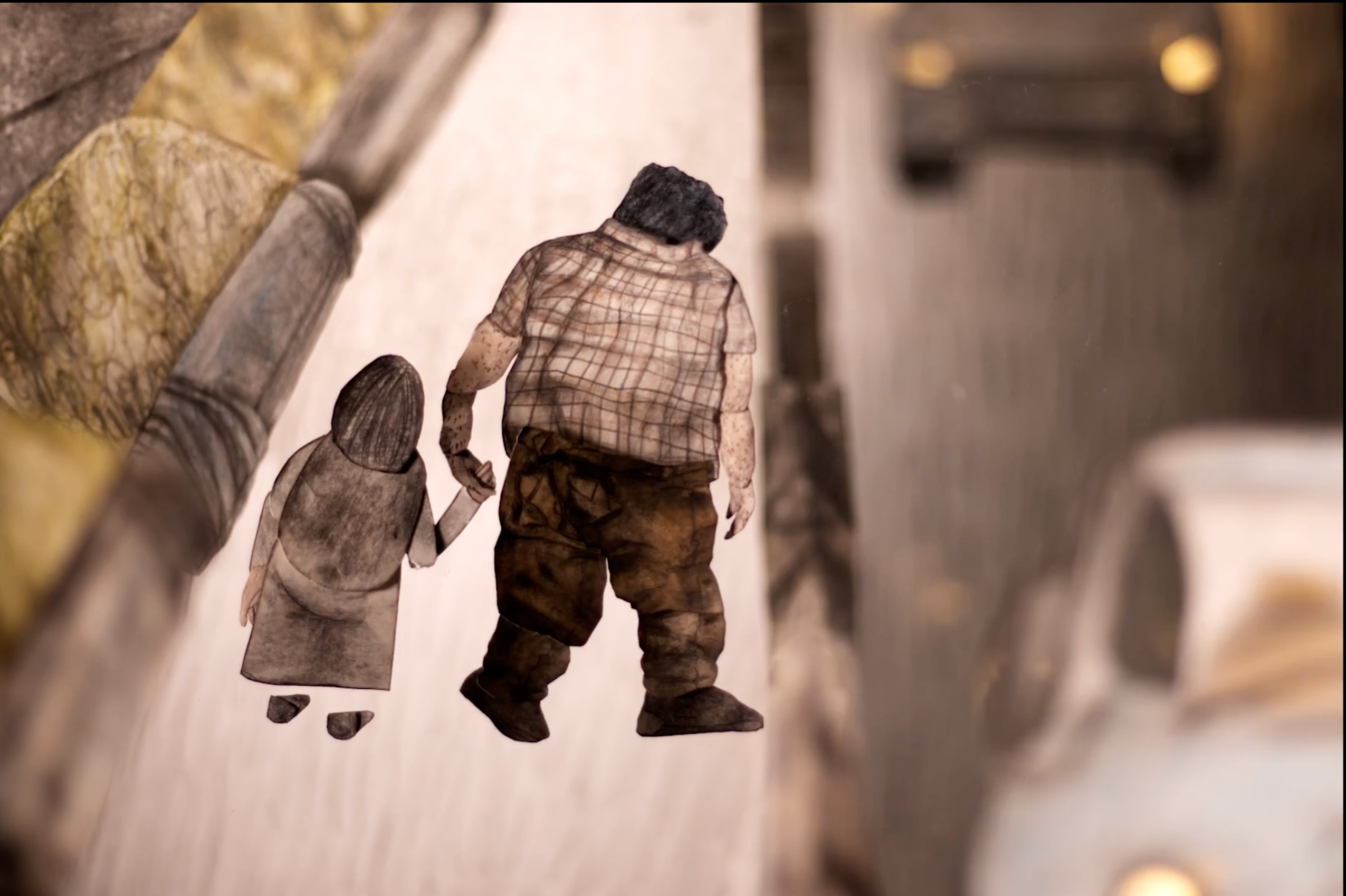
Kaloyan Vasilev: And what about the other elements, like the metal construction pieces, the smoke coming out of the glasses, or the TV show on the paper TV? Were those difficult to integrate into the story?
Alica Khaet: Some of those ideas came spontaneously during production. For the TV, for example, I initially thought about showing clips from one of my other films. But then, together with my sound designer, I decided to use something more realistic. So that moment grew out of improvisation.
Kaloyan Vasilev: You mentioned the glass table for the animation, how big was it? The project feels massive.
Alica Khaet: The whole film took me about five years to complete, although, of course, not every day. The most intense period was about one and a half to two years. My studio is very small, about 12 square meters, and the animation table was only 60 to 80 centimeters. I shot most of the film myself, and the room was completely full of paper elements. Thousands of them. Now it all fits into one small box, but during production, it was total chaos.
Kaloyan Vasilev: I can imagine! How did you keep track of all the pieces?
Alica Khaet: Honestly, I can’t even explain it anymore. But at the time, I knew exactly where each piece went. Sometimes I’d lose one and have to recreate it from scratch.
Interviewer: Kaloyan Vasilev
Editor: Martin Kudlac
Kaloyan Vasilev’s Take
Feferle, directed, animated, and narrated by Alica Khaet, is a German 15-minute-long stop-motion animation that tells the story of a child-like being exploring her family's Jewish heritage and Eastern European history while sorting through her late father's belongings. The film is personal, yet universally resonant, inviting reflection on memory, grief, and cultural identity.
Feferle unfolds through the magic of stop-motion animation. What’s particularly remarkable is how Khaet uses small, hand-drawn and cut pieces of paper, meticulously assembled to tell her story. Each fragment becomes part of a whole that transcends its components. The film has many visual layers, each tiny paper piece, while individually well-crafted, holds limited meaning on its own. It’s their combination that builds Feferle’s intricate, multidimensional world, one that a single viewing can hardly capture in full. Backgrounds, characters, and props move in perfect coordination, producing a living collage that feels as fragile and precious as memory itself.
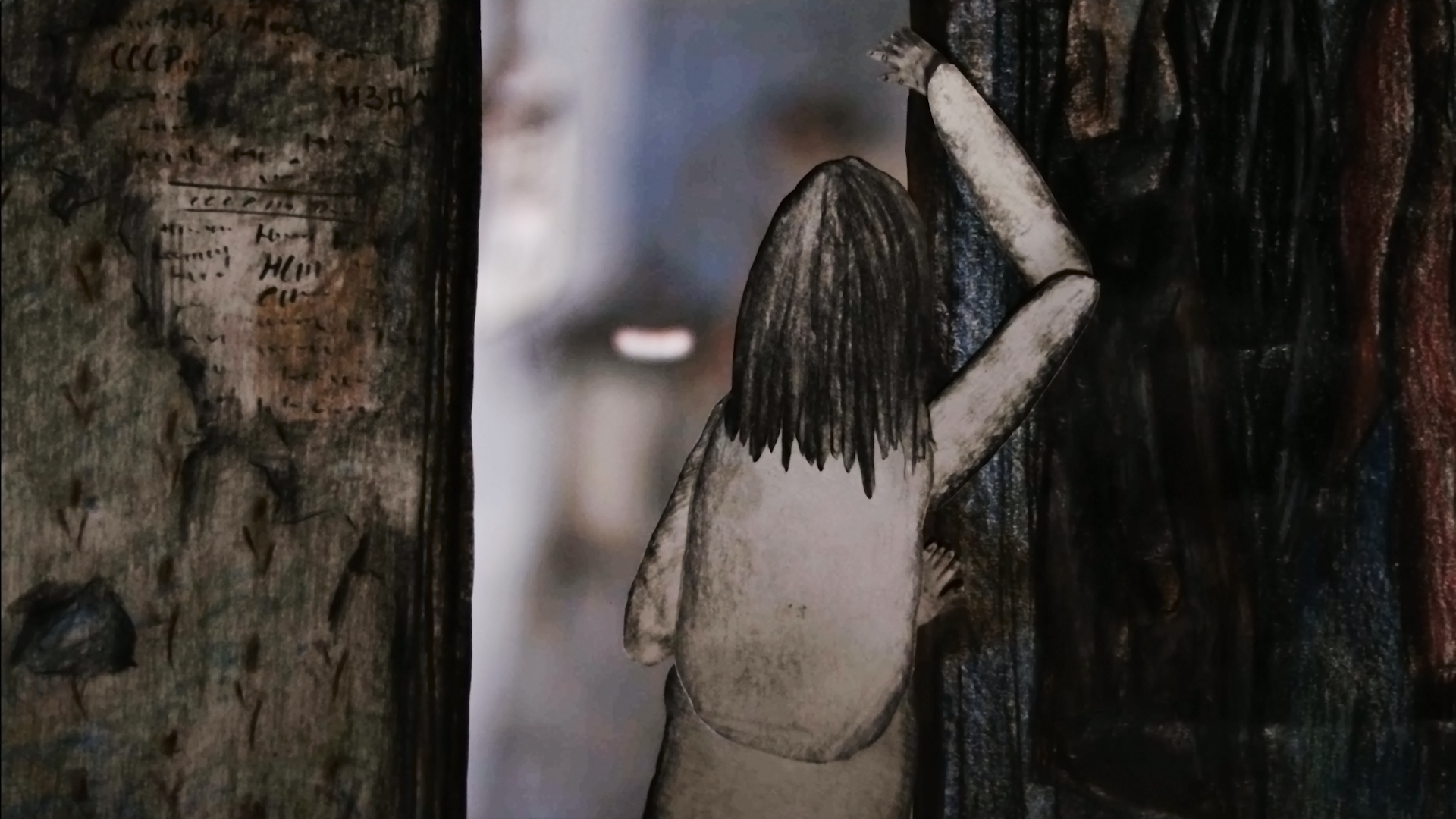
Another standout choice is the film’s editing. From the very first scene, we notice something brave and experimental: frequent shifts in focus and quick reframing. These techniques, typically discouraged in conventional animation, enhance the film’s visual coherence, reflecting how historical and cultural heritage can be fragmented and easily altered, consciously or not. The constantly shifting visual language reflects the uncertainty of inherited memory, and the unstable terrain of navigating the past through present emotions.
The editing and shifting focus make Feferle a visually captivating experience, with every frame offering something to hold the viewer’s attention, especially in the context of our fast-paced, modern expectations. This engagement allows the film’s pacing, which at first glance might seem fragmented, to mirror its emotional arc: we move from disorientation and grief, represented by a disjointed montage, toward acceptance, reflected in smoother, calmer sequences. The visual rhythm becomes more meditative as the protagonist begins to piece together the puzzle of her family’s past.
Though the film includes little music, its sound design remains immersive, adding life and cohesion to the world Khaet has crafted, and leaves enough space for the narrator to tell her story. Every creak, scratch, or background noise feels intentional, grounding us in a tangible world despite its crafted nature. Khaet’s soft, reflective narration contrasts with the visual experimentation, giving the viewer emotional anchoring as the film unfolds.
Feferle is an original work that blends experimental form with emotional depth. The way the film approaches historical memory, by layering the visual, auditory, and narrative elements into a tactile, emotional mosaic, demonstrates the power of handmade cinema. Alongside its handcrafted aesthetic and bold editing choices, Feferle stands apart from other contemporary animations and offers something uniquely poetic and profound. It will undoubtedly be appreciated by audiences who value innovation, sincerity, and storytelling that dares to be different.


