


COLLECTABLE STORIES: BLOODLINE

BLOODLINE
A Short Talk with Zuza Grabowska (editor)
BEST DOCUMENTARY category
22nd IN THE PALACE International Short Film Festival 2025
Poland, Documentary, 00:12:07, 2024
Synopsis: A bison, prevented from returning to its native herd by a wall on the Polish-Belarusian border, witnesses dramatic events.
Biography: Documentary film director and cinematographer. Cinematography student at Polish National Film School in Lodz. Studied at School of Films in Thessaloniki and Krzysztof Kieślowski Film School. Volunteer on the Poland-Belarus border.
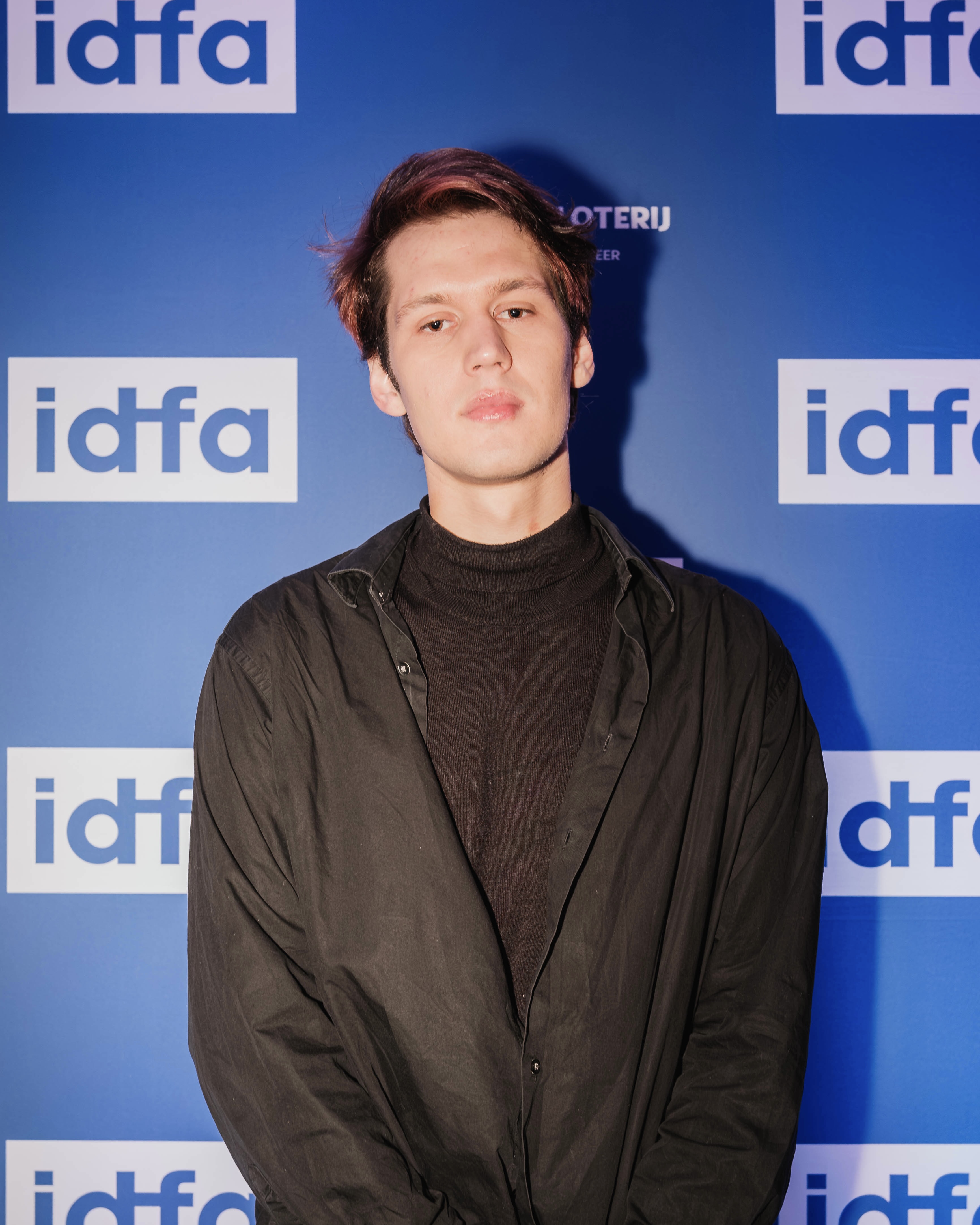 Wojciech Węglarz, director
Evgenia Evtimova: This film is quite experimental, especially for a documentary, since they are often written and structured entirely in the edit. Was there any pre-determined idea or story structure, or did it all come together in the cutting room?
Zuza Grabowska: When I first met the director, Wojciech Węglarz, before the shoot, he told me his idea and already had a precise structure in mind. It was based on the Hero’s Journey, “We’re going to find a bison, and he’s going to have a family.” I remember thinking, “That sounds like a plan,” but I wasn’t sure it would work out during the shoot.
We had a lot of conversations before production about how to build a structure that would allow for improvisation but still reach the kind of final product we wanted. When they came back with the first batch of material, it didn’t seem to work at all. But over time, as we kept editing and adding more footage, we started shaping the narrative.
We even named the bison Franek. The real challenge was finding a way to humanise him, to create a connection. A lot of people suggested using voiceover, but we really wanted to avoid that. We focused on letting the story unfold visually. In the end, I think we came very close to the structure Wojciech had written before filming even began.
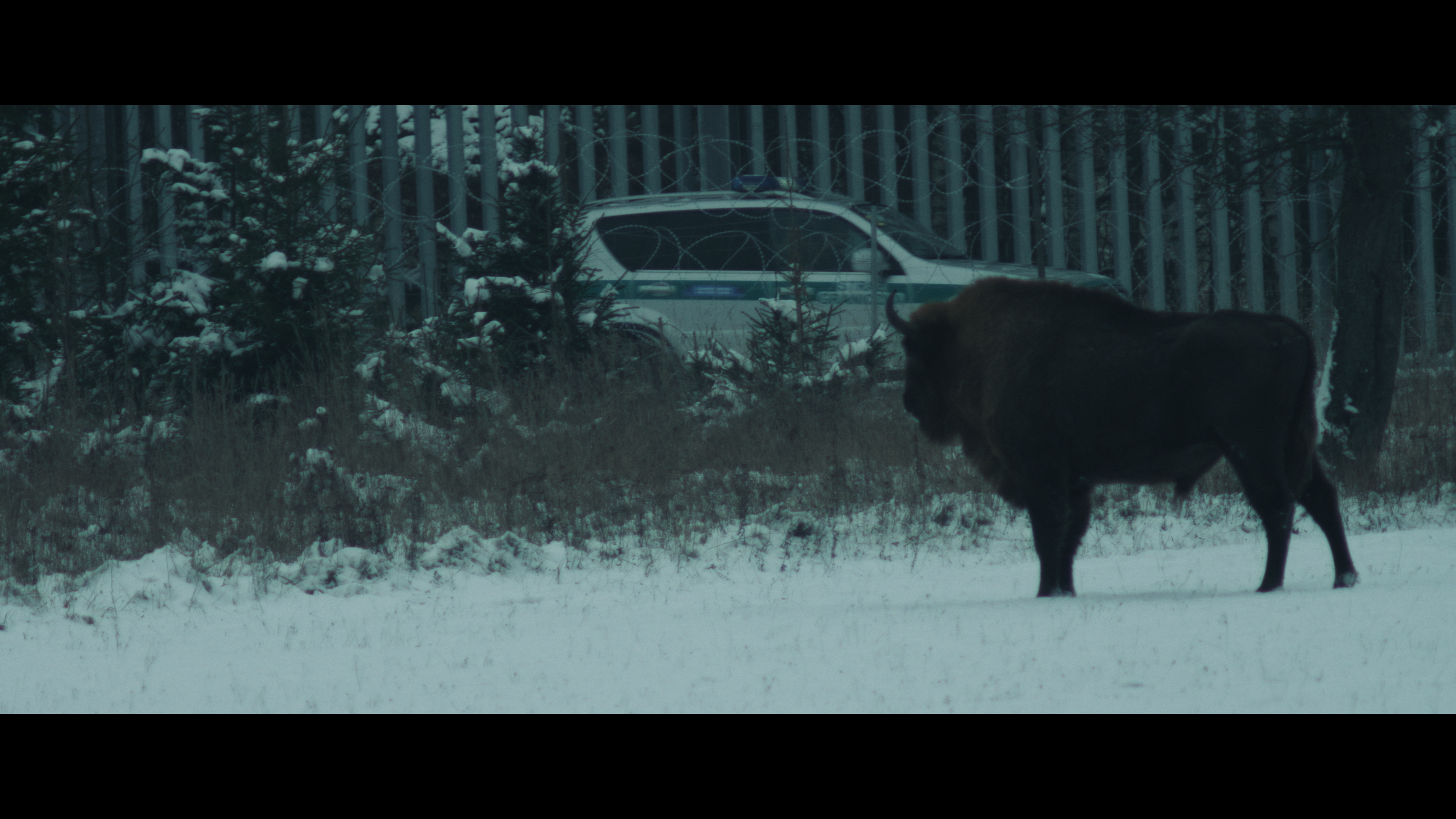
Evgenia Evtimova: How did you find this bison and film him like that, was he a paid actor?
Zuza Grabowska: [laughs] No, Franek wasn’t the only one, we had to switch between several. We tried to follow just one bison at first, but that clearly didn’t work.
There were three cinematographers, plus the director, and they went to the Polish-Belarusian border to shoot in the wild. It was an incredible experience for them, to get so close to the animals. Sometimes they used really long lenses, of course. We ended up with hours and hours of footage. It took just as many hours to sift through it and choose what was needed.
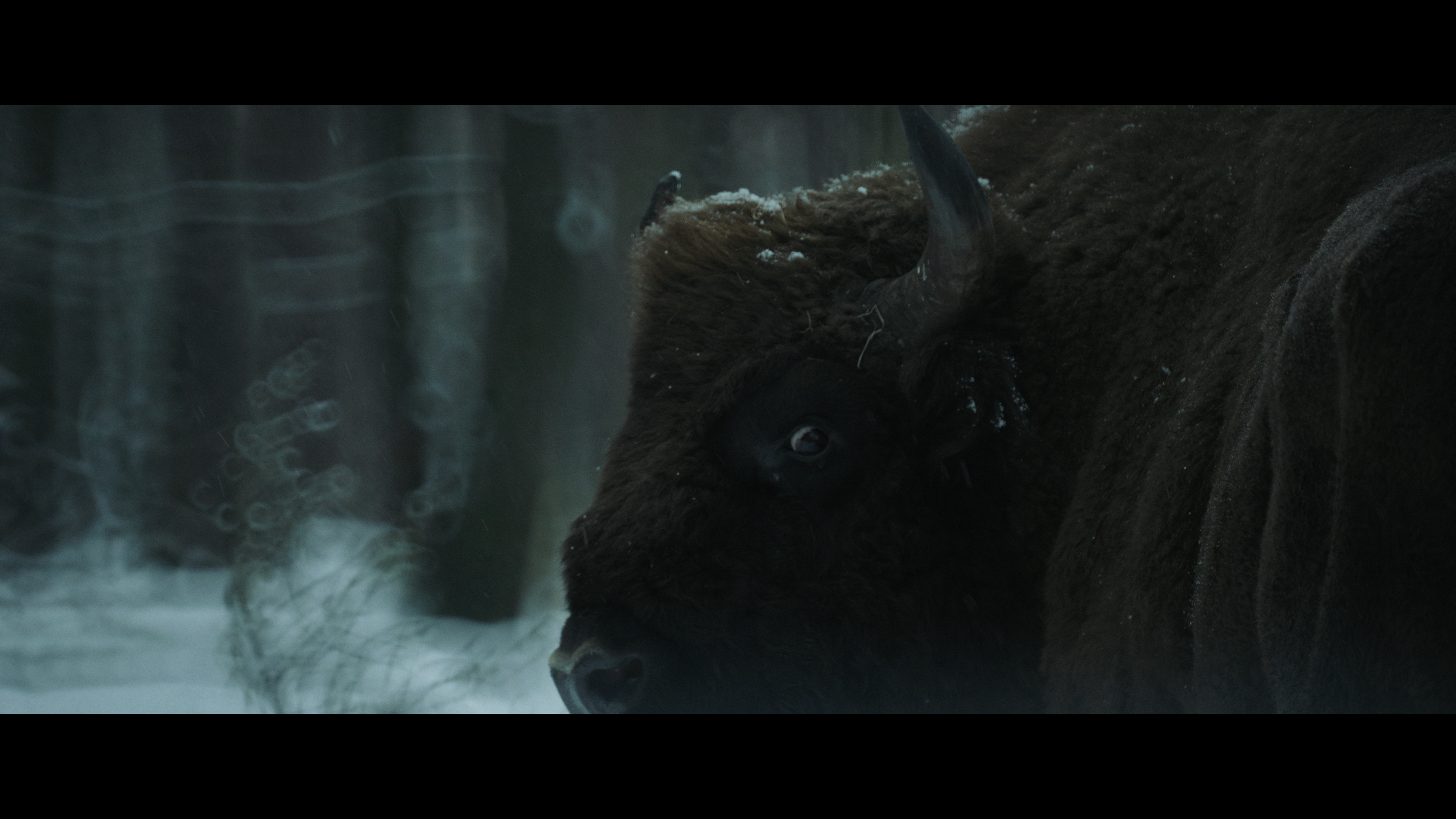
They shot a lot of wide angles, but we were looking for emotion, which is quite difficult to capture in an animal. But then there was this over-the-shoulder shot of the bison, almost a close-up. When I saw it, I couldn’t believe it was real. It looked fictional. And I could really feel something in it, it gave us that emotional connection.
Evgenia Evtimova: I imagine it must have been overwhelming to go through all that footage, most of which probably made no narrative sense. What was your guiding logic while editing?
Zuza Grabowska: There was one scene with a wolf, that happened on the first day of shooting. After they filmed it, they immediately called me and said, “Zuza, we have an ending, something really strong.”
It became both our greatest strength and our biggest challenge. Because while it was powerful, it was hard to make it work with the rest of the story and still stay within the boundaries of documentary realism.
At first, we tried placing it at the end of the bison’s journey. But later, since Wojciech wanted to preserve that metaphor of the wall, of conflict and danger between species—we decided to open with it. And from there, we let the structure unfold.
Interviewer: Evgenia Evtimova
Editor: Martin Kudlac
Evgenia Evtimova’s Take
A lone bison, separated from its herd by the towering fence of the Polish-Belarusian border, stands as both witness and symbol in Bloodline, an arresting short experimental documentary, premiered at IDFA, that blends raw observation with editorial precision. Director Wojciech Węglarz and editor Zuza Grabowska created a cinematic elegy to nature disrupted, not with voiceover or talking heads, but through movement, atmosphere, and gaze.
Set in the Białowieża Forest, one of Europe’s last primeval woodlands, the film opens with an extraordinary long take that seems to dissolve into the bison’s perspective. This hypnotic shot, as Grabowska recounts, was not just a lucky capture, it became the emotional cornerstone of the film’s structure. “When I saw that over-the-shoulder shot, I couldn’t believe they [cinematographers] had gotten it. It looked fictional. It had emotion, which is hard to achieve with animals.”
The film was initially envisioned by Węglarz as a kind of wildlife hero’s journey, the tale of the so-called “Franek”, a bison trying to reconnect with his herd. Though Grabowska was skeptical that this narrative could be sustained, she joined the project early, and their collaborative discussions allowed space for improvisation and narrative flexibility. “The more we edited, the closer we came back to that initial idea,” she says.
But Bloodline isn’t simply about one animal. It’s about human boundaries, and their collateral damage. The border wall that cuts across the forest was erected to block the passage of migrants, yet it cleaves ecosystems and endangers species in silence. Without ever leaning into didacticism, the film delivers a chilling political metaphor. A deer, caught on the wrong side of the fence, falls prey to wolves. No voice calls for help. No narration breaks the silence. We only see, and feel.
This minimalist approach was a conscious choice. Though many suggested adding voiceover, the team rejected it. “We didn’t want to anthropomorphize,” Grabowska explains. “We wanted to build an emotional connection without words.”
The editing here is nothing short of masterful. Working with over 40 hours of footage shot by three cinematographers, Grabowska faced the monumental task of carving out a coherent emotional arc from nonverbal material. “We had so many wide shots,” she says, “but I needed intimacy. I needed emotion.” The balance between abstraction and specificity is delicately maintained. The structure avoids sentimentality, yet lands with deep pathos, especially in how it frames the bison not as a subject of study, but as a silent protagonist.
One particularly striking editorial decision involved a visceral wolf attack, filmed on the very first day. Initially conceived as the film’s ending, the scene was repositioned to open the film. It immediately establishes stakes, conflict, and metaphor. “It was strong, but difficult,” says Grabowska. “We had to find the right place for it emotionally.”
Throughout, the visual language leans into high contrast, with portions of the film resembling negative exposure, heightening the sense of disorientation and otherworldliness. The result is a film that feels at once ancient and political, primal and hyper-modern.
Bloodline is a quietly radical documentary, precise in form, expansive in implication. It’s a testament to how much power lies in how a story is told, especially when the subject cannot speak for itself. And it confirms Zuza Grabowska as one of the most exciting documentary editors working today, with a rare ability to conjure meaning from silence, motion, and instinct.


